
There is a quiet drama happening inside every cell in your body.
No spotlight. No heartbeat monitor. No heroic surgeon. Just a microscopic maintenance crew working around the clock, deciding what should be repaired, recycled or thrown out.
When that system works, cells stay cleaner, more resilient and more functional. When it starts to fail, damaged proteins accumulate, mitochondria become stressed, inflammation rises, and tissues begin to lose their ability to cope.
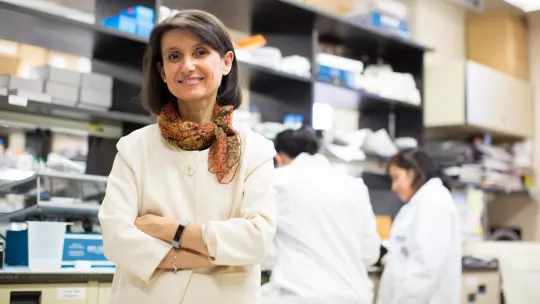
That system is called autophagy — literally, “self-eating” — and few scientists have done more to explain its importance in aging than Dr. Ana María Cuervo.
Cuervo is a Distinguished Professor at Albert Einstein College of Medicine, the Robert and Renée Belfer Chair for the Study of Neurodegenerative Diseases, and co-director of the Einstein Institute for Aging Research. Her work focuses on how autophagy, the cell’s quality-control and recycling system, deteriorates with age and contributes to diseases including Alzheimer’s, Parkinson’s and other age-related disorders. (einsteinmed.edu)
The most interesting part is this: Cuervo’s work does not frame aging as a vague decline. It frames aging as a maintenance failure.
And that changes the conversation.
Autophagy: the body’s internal recycling system
Cells are not static. They are more like cities: crowded, busy, noisy and full of waste. Proteins misfold. Organelles wear out. Molecules get oxidized. The cell needs a way to remove what is damaged before the damage spreads.
That is where autophagy comes in.
There are several forms of autophagy, but Cuervo is especially known for her work on chaperone-mediated autophagy, or CMA. Unlike bulk recycling systems, CMA is selective. It does not simply sweep the floor; it identifies specific damaged or unnecessary proteins and delivers them to lysosomes, where they are broken down and recycled. Cuervo’s lab describes its central interest as understanding how altered proteins are eliminated and how their components are recycled, particularly in aging and age-related disease. (einsteinmed.edu)
A simple way to think about CMA is this:
Macroautophagy is like sending a garbage truck through the neighborhood.
Chaperone-mediated autophagy is more like a concierge service that recognizes individual packages, checks their labels, and sends the right ones to the recycling center.
That selectivity matters enormously in the brain and retina, where cells are long-lived and cannot easily be replaced.
Alzheimer’s disease: when protein cleanup falls behind
Alzheimer’s is often discussed through amyloid plaques, tau tangles and memory loss. Cuervo’s research adds another layer: what if part of the problem is that the brain gradually loses its ability to clear dangerous proteins before they accumulate?
In 2021, Cuervo and colleagues published work in Cell showing that loss of neuronal CMA causes proteotoxicity and neuronal dysfunction. In experimental Alzheimer’s models, CMA loss had a synergistic negative effect on proteins prone to aggregation and accelerated disease progression; conversely, chemical enhancement of CMA improved pathology in two Alzheimer’s mouse models. (ScienceDirect)
That is a big idea.
It suggests that neurodegeneration may not be only a problem of “bad proteins appearing.” It may also be a problem of good cleanup systems failing.
Cuervo’s lab has also studied tau, one of the signature proteins involved in Alzheimer’s and related tauopathies. Her lab lists work showing that acetylated tau can inhibit CMA and promote tau pathology propagation in mice. (sites.google.com)
That creates a vicious cycle: damaged proteins interfere with the cleanup system, and a weaker cleanup system allows more damaged proteins to accumulate.
It is the biological equivalent of a city where the garbage workers go on strike during a heatwave.
Parkinson’s disease: the same maintenance problem, different vulnerable cells
Parkinson’s disease has its own molecular cast of characters, including alpha-synuclein, LRRK2 and lysosomal dysfunction. But the broad theme is familiar: protein handling and cellular quality control go wrong.
The Michael J. Fox Foundation describes Cuervo’s group as studying how altered proteins can be eliminated from cells and notes that her work has linked alterations in lysosomal protein degradation with Parkinson’s, Alzheimer’s and Huntington’s disease. (michaeljfox.org)
Cuervo’s lab has also published work on the interplay between LRRK2 and chaperone-mediated autophagy, and her lab page states that pathogenic proteins related to Parkinson’s and Alzheimer’s exert toxic effects on autophagic pathways including CMA. (sites.google.com)
The point is not that Alzheimer’s and Parkinson’s are the same disease. They are not.
The point is that they may share a deep vulnerability: aging cells become worse at maintaining protein quality.
That matters because it points toward a therapeutic strategy that is different from attacking one protein at a time. Instead of only asking, “How do we remove amyloid?” or “How do we reduce alpha-synuclein?”, Cuervo’s work invites a broader question:
Can we restore the cell’s ability to clean itself?
That does not mean a cure is around the corner. Most of this work is still preclinical or mechanistic. But as a research direction, it is powerful because it targets one of the root processes that appears to deteriorate with age.
The retina: where autophagy meets vision
The connection between Cuervo’s work and macular degeneration is especially interesting — and newer.
Age-related macular degeneration, or AMD, is not usually described in the same breath as Alzheimer’s or Parkinson’s. It affects the eye, not the brain. But biologically, the retina is part of the nervous system. It contains highly specialized cells that must survive for decades under intense metabolic and oxidative stress.
The retinal pigment epithelium, or RPE, is particularly important. These cells support photoreceptors, process visual-cycle byproducts and help maintain retinal health. They are also exposed to relentless stress from light, oxygen and metabolic load.
A 2013 study involving Cuervo reported that aging is the largest risk factor for AMD, that lipofuscin accumulation is a hallmark of aged eye pathology, and that macroautophagic activity decreases in the retina with age while CMA increases. The authors suggested that the balance between different lysosomal degradation systems may influence patterns of visual loss during aging. (PubMed)
That finding is elegant: the retina does not simply “age.” Its internal recycling systems shift, compensate and eventually may fail.
Then came a more direct step. In 2022, work involving Cuervo and collaborators showed that targeting the NCoR-RAR interaction activates chaperone-mediated autophagy and protects against retinal degeneration. The CSIC summary of the study describes it as a proposed therapeutic strategy for retinal degeneration, based on activating CMA. (csic.es)
More recently, a 2025 study in EMBO Molecular Medicine reported decreased CMA activity in the RPE of AMD patients compared with healthy age-matched controls. The same study found accumulation of CMA substrate proteins and used donor-derived iPSC-RPE cells to study AMD-related homeostatic problems. Treatment with a CMA activator, CA77.1, restored proteostasis, reduced oxidative stress and improved mitochondrial function in AMD iPSC-RPE cells. (Experts@Minnesota)
That is not a clinical treatment yet. It is not something patients can go and get from an ophthalmologist today.
But it is highly relevant.
It suggests that AMD may involve, at least in part, a failure of selective protein recycling in the very cells that keep the macula functioning.
Why this matters: aging as loss of cellular competence
The common thread across Alzheimer’s, Parkinson’s and macular degeneration is not just “old age.”
It is the gradual loss of cellular competence.
Cells become less able to:
- remove damaged proteins
- maintain proteostasis
- manage oxidative stress
- preserve mitochondrial function
- adapt to stress
- prevent toxic accumulation
Cuervo’s work is compelling because it moves beyond superficial anti-aging language. It does not promise immortality, youthfulness or miracle reversal. It asks a more serious question:
What exactly breaks inside aging cells, and can we repair enough of it to delay disease?
That is a better question.
It is also more useful for medicine.
In Alzheimer’s, the hope is that restoring autophagy might reduce toxic protein accumulation or improve neuronal resilience. In Parkinson’s, the hope is that improving lysosomal and CMA function might help cells handle disease-related proteins. In macular degeneration, the hope is that restoring autophagy in RPE cells might protect the retina from oxidative stress, proteotoxicity and degeneration.
Different diseases. Different tissues. Same maintenance philosophy.
The danger: turning autophagy into a buzzword
There is one problem: autophagy has become fashionable.
Online, it is often reduced to fasting, supplements and biohacking. That is too simplistic.
Autophagy is not a magic switch. More is not always better. Different tissues use different autophagic pathways in different ways. Macroautophagy, CMA and microautophagy are not interchangeable. And what helps in one biological context may not help in another.
Cuervo’s research is valuable precisely because it is specific. It does not just say “activate autophagy.” It asks which pathway, in which cell type, under which conditions, and with what consequence.
That distinction matters enormously.
For example, in the aging retina, one study found a decrease in macroautophagy alongside an increase in CMA, suggesting a complex balance rather than a simple on/off decline. (PubMed) In AMD patient-derived RPE cells, the more recent focus is on defective CMA and whether activating it can restore cellular function. (Experts@Minnesota)
That is real biology, not wellness marketing.
What patients should take from this
For patients and families dealing with Alzheimer’s, Parkinson’s or macular degeneration, the immediate message should be cautious but hopeful.
Cuervo’s research does not mean that an autophagy pill is currently available to prevent these diseases. It does not mean that fasting or supplements can treat AMD or Parkinson’s. It does not replace standard medical care, ophthalmology follow-up, anti-VEGF therapy for wet AMD, approved therapies for geographic atrophy, or neurologic care for neurodegenerative disease.
What it does mean is that one of the most serious areas in aging biology is beginning to connect molecular aging with diseases that affect memory, movement and vision.
That is exciting.
Because if diseases of aging share common maintenance failures, then future therapies may not only target the end-stage symptoms. They may help cells stay functional for longer.
Stay curious. Stay engaged. Stay ahead.
Alberto Arnedillo DynamicAging.org
Want to go deeper?
We bring together scientists, biotech leaders, and forward-thinking professionals to explore exactly these questions — before they become mainstream.
Request your invitation to our next roundtable
Found this useful? Share it with someone over 50 who deserves to know what’s coming.